
Read the early signs
Notice body language, stress responses and changes that happen before your dog reaches the point of reacting.
Online reactive dog training
Understand what drives your dog’s reactions and build practical skills for everyday life.
Barking, lunging, freezing or becoming overwhelmed around dogs, people, visitors, noises or movement can make everyday life feel unpredictable. This 8-module program gives you a structured way forward.
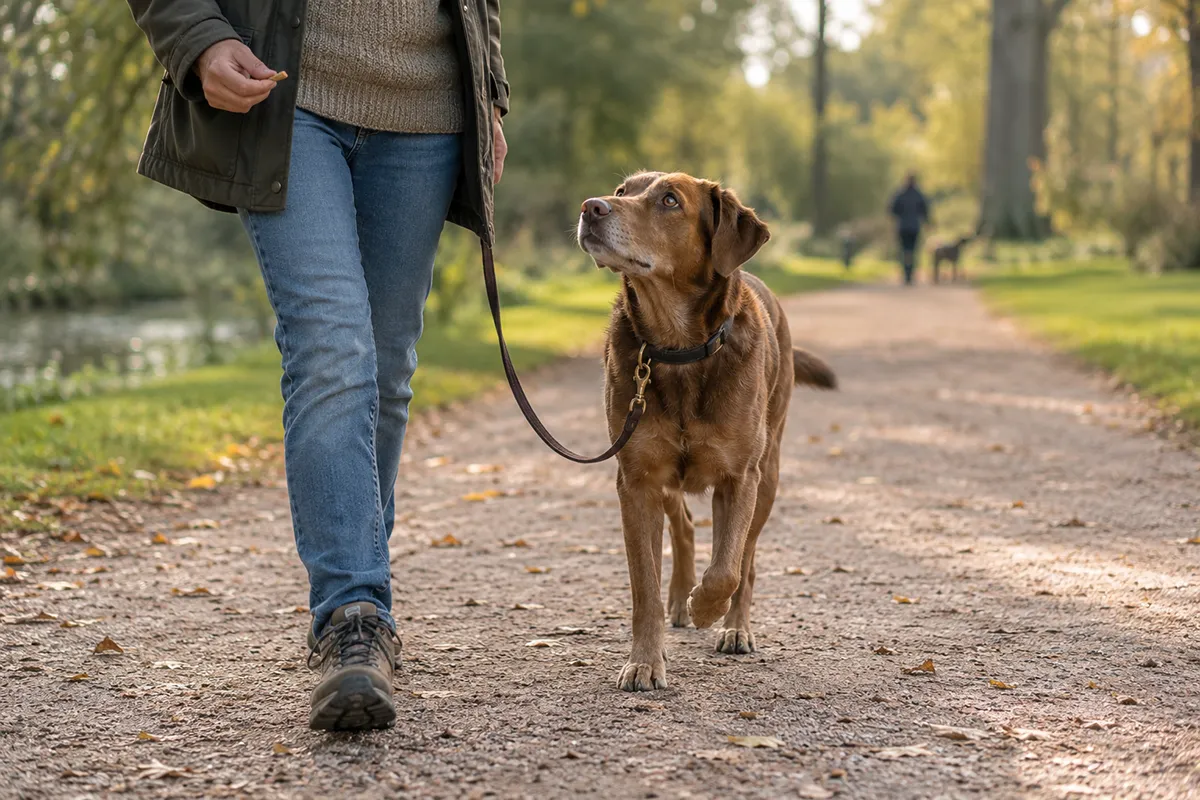
Start before the reaction
The reaction is the part you can see. The important question is what is happening before it. Fear, frustration, arousal, distance, health, sleep and accumulated stress can all influence how a dog responds.
The course begins with understanding and observation before moving into stress reduction, confidence, practical handling skills and real-world training. You learn when to train, when to create distance and when management is the better choice.
Notice body language, stress responses and changes that happen before your dog reaches the point of reacting.
Identify individual triggers, trigger stacking and the situations that make recovery harder.
Look at sleep, environment, walks and everyday routines so training is not fighting against constant stress.
Develop multiple options for attention, distance, movement, reinforcement, leash handling and recovery.
The 8-module program
Explore reactivity, triggers, trigger stacking, common stress responses, expectations and a traffic-light approach to distance and difficulty.
Study body language, nervous-system responses, health and diet, then start tracking patterns, rewards and realistic goals.
Reduce pressure through sleep, stress management, walk alternatives, trigger management and calmer routines at home.
Use predictable patterns, reinforcement and exercises such as 123 Treat and Look at That to create safer experiences.
Practice leash and long-line handling, emergency U-turns, a positive interrupter, calmer exits, door skills and loose leash walking.
Build focus, hand targeting, settling, enrichment, play and more positive emotional associations.
Apply the foundations to harder situations, reduce leash tension, move away more effectively and address doorbells and visitors.
Review progress, find everyday training opportunities, assess hazards and prepare for situations you cannot fully control.
Training you can use
The program combines more than 100 videos with exercises and downloadable tools that help you observe patterns and train more deliberately. Progress with a reactive dog is not always dramatic. It may mean noticing a trigger earlier, recovering faster or being able to move away before the situation escalates.
Both ends of the leash
A reactive episode affects the person holding the leash as well. The course therefore includes practical planning for unexpected situations and looks at how breathing, posture, expectations and responses can influence difficult moments.
The goal is not to blame either end of the leash. It is to give both of you more useful options.
If your dog’s behavior has changed suddenly, consider a veterinary check because pain or illness can influence behavior. If there is a serious bite risk, severe aggression or a situation that cannot be managed safely, seek appropriate individual professional support.
Mika Dog Training
Mika Dog Training is created by Tom Rosens, owner of Hondleiding in the Netherlands. The training focuses on clear communication, reward-based methods and practical situations owners and instructors actually encounter.
Frequently asked questions
Every dog is different, so no responsible program can promise that a dog will never react again. The goal is to reduce unnecessary stress, build useful skills and improve how difficult situations are handled. Meaningful progress can include fewer or less intense reactions and faster recovery.
No. The course also covers reactions involving people, visitors, noises, windows and other everyday triggers.
Yes. Part of the program looks at reducing pressure around walks and using management or alternatives while you work on the underlying skills.
There is no reason to rush. This is a substantial program and behavior change takes time. Work at a pace that gives you time to practice.
The course focuses on understanding behavior, reinforcement, management, confidence and practical skills rather than intimidating or punishing a dog for reacting.
If there is a serious bite history or safety risk, individual professional guidance is strongly recommended. An online course should not be your only source of help in a high-risk situation.
Choose your option
Learn what your dog is telling you, reduce unnecessary pressure and build a practical plan for the situations that are difficult now.