Cycling together with your dog can be a lot of fun. However, there are a few important things to keep in mind to ensure it remains safe and enjoyable.
At what age can you start?
Only cycle with a fully grown dog, not with a puppy that is still developing. Some breeds are fully grown at around 18 months, while others may take up to two years.
On average, you can start introducing short practice sessions from around 12 months of age. Begin slowly, for example in your own street, and gradually increase the distance as your dog gets older.
Which breeds are suitable?
Some breeds are less suited for cycling.
Dogs with short noses, such as English Bulldogs, Shih Tzus and Boston Terriers, can become short of breath more quickly and are therefore less suitable.
Dogs with short legs, such as Chihuahuas, Maltese and Dachshunds, often struggle to keep up with a normal cycling pace. For Dachshunds in particular, cycling can also place extra strain on their back.
Teaching your dog to walk next to the bike
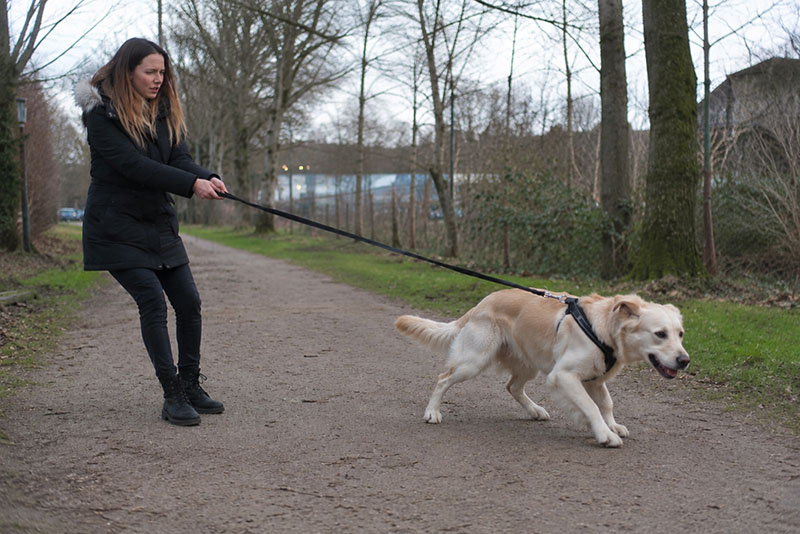
If you want your dog to walk alongside your bike, they should first be able to walk calmly on a leash without pulling. This helps prevent your dog from pulling you off balance.
It is also not allowed in the Netherlands to use your dog to pull the bike.
Some dogs may initially find a bicycle intimidating and prefer to keep their distance.
Start by walking with the bike in your hand. Walk on the left side of your bike, with your dog on the right side. Always keep your dog on the right, so they are not on the side of traffic.
Once this goes well, you can begin cycling short distances, for example a few meters in your street. Gradually increase the distance as your dog becomes more comfortable and builds condition.
Teach your dog to move smoothly through turns. This prevents your dog from being pulled unexpectedly when turning left or being hit by the bike when turning right.
Always adjust your speed to your dog, not the other way around. Let your dog move at a trot, not a gallop, as galloping places more strain on the joints.
Cycling too much
Regular cycling may seem like a good way to tire out an energetic dog, but it has a downside. As your dog’s fitness improves, they will be able to keep going for longer distances.
This means you may need to cycle longer and longer to achieve the same level of tiredness. On days when you do not cycle, your dog may have excess energy.
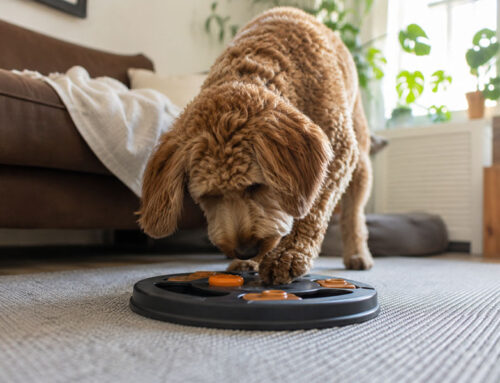
It is better to keep cycling sessions relatively short and provide mental stimulation instead. This can be done through brain games at home or training exercises during walks or courses.
Your own safety
Do not attach the leash to your wrist or your handlebars. If your dog suddenly moves to the side, it can pull your steering with it.
A safer solution is a bike attachment designed for dogs, often called a springer. This is a device that connects the leash to the bike frame. It keeps your hands free and helps maintain a safe distance between your dog and the bike.
Another option is a waist belt. This keeps your hands free, but does not prevent your dog from getting too close to the bike.
Your dog’s safety
In addition to your own safety, your dog’s safety is equally important. Keep the following in mind:
Do not cycle with your dog when temperatures are above 20 degrees Celsius. Dogs can overheat quickly because they mainly cool themselves through their tongue and paw pads.
Let your dog move at a trot, not a gallop.
Use a harness instead of a collar. If your dog suddenly stops or if you fall, the pressure will be distributed across the body rather than the neck.
Bring enough water for your dog and yourself. Do not let your dog drink a large amount immediately after cycling. A few sips is enough.
Do not cycle within two hours after feeding or within thirty minutes before feeding, due to the risk of gastric torsion.
Check your dog’s paw pads regularly. Walking on hard surfaces can cause wear or burns, especially on hot asphalt.
Asphalt can become very hot in warm weather. If it feels hot to your hand, it is too hot for your dog’s paws.
Bike trailer or basket
Do you have a dog that gets tired quickly, or a breed that is less suitable for running alongside a bike, but still want to go cycling together?
A dog trailer attached to your bike can be a good solution. For small dogs, a basket mounted on the handlebars can also be an option.

 Only cycle with a fully grown dog, not with a puppy that is still developing. Some breeds are fully grown at around 18 months, while others may take up to two years.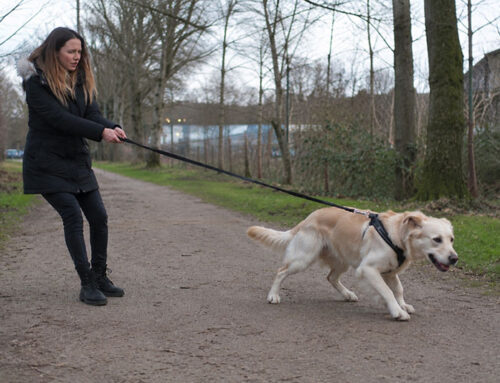




Leave A Comment