Understanding Puppy Behavior: Why Puppies Can’t Do Everything Yet
A puppy is sweet, cute and curious, but can also be nippy, restless or even afraid of new things. Many people have high expectations of their puppy. He should quickly become house-trained, walk nicely on a leash, respond to his name and, most of all, not cause any problems.
 But just like children, a puppy’s brain is still developing. And that requires patience, repetition and realistic expectations.
How developed is a puppy really?
At birth, puppies are blind, deaf and completely dependent on their mother. Around three weeks of age, they begin to explore their environment. By the time they go to their new home, usually around 8 weeks, they have only just started to understand how the world works.
Important parts of the brain, such as those responsible for impulse control, memory and social behavior, continue to develop in the months that follow. So do not expect a 10 week old puppy to already understand what is allowed and what is not. They simply do not have the capacity to fully process or remember it yet.
Puppies learn in stages, just like children
Learning is not a straight line. Puppies develop in bursts. One week it may seem like they understand everything, house training, being alone, walking nicely, and the next week it feels like they have forgotten it all. This is completely normal.
Puppies also go through sensitive learning phases:
-
8 to 12 weeks: Socialization. Getting to know people, animals, sounds and different environments.
-
12 to 16 weeks: Self control begins. Learning to wait and not jump on everything.
-
4 to 6 months: Adolescence starts. Impulse control decreases and boundaries are tested.
-
6 to 9 months: Confidence grows, but behavior can become unpredictable.
What can you realistically expect from a puppy?
Instead of focusing on what is not working yet, look at what is possible:
-
Short attention span. One to two minutes of training is enough.
-
Exploring and sniffing. This is how dogs learn about the world.
-
Structure and predictability. This supports house training.
-
Building up alone time gradually, in small steps.
-
Learning to relax. For example on a mat, not by exhausting the puppy.
It is not about perfection, but about creating positive experiences.
Common mistakes when training puppies
-
Training for too long
Puppies get mentally tired quickly. Short sessions with frequent rewards are more effective than one long session.
-
Punishing normal behavior
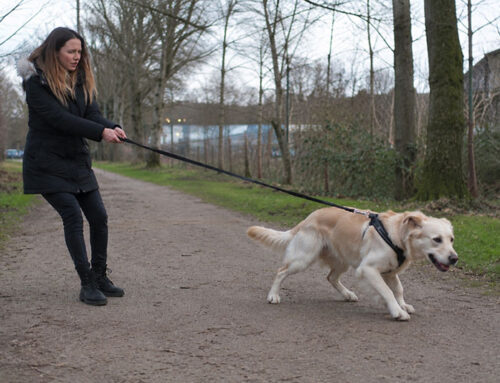
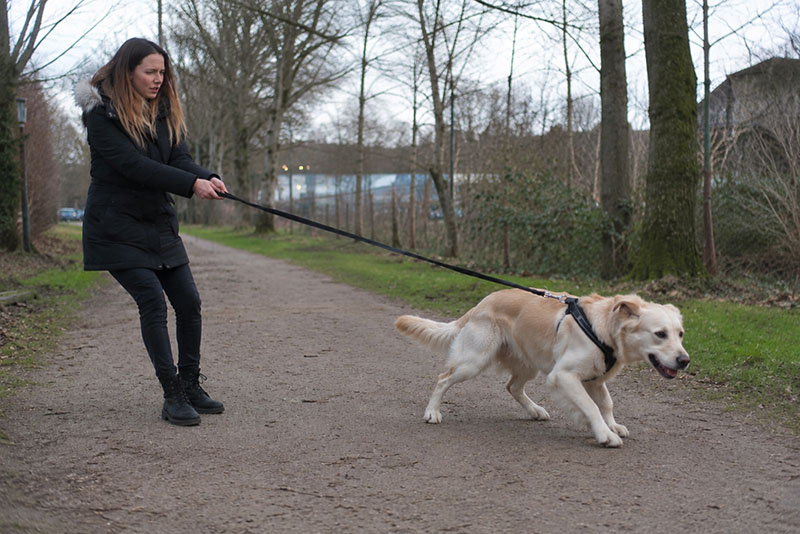
Biting, barking or pulling are normal puppy behaviors. Correction rarely helps. Redirect, offer an alternative and reward what you want to see.
-
Ignoring overstimulation
Too many stimuli can lead to hyperactive behavior or withdrawal. Provide enough rest, preferably in a consistent place.
-
Comparing with other dogs
Every puppy is different. One may learn “sit” quickly, while another feels more comfortable around visitors first. Progress can vary.
How to support your puppy in the right way
-
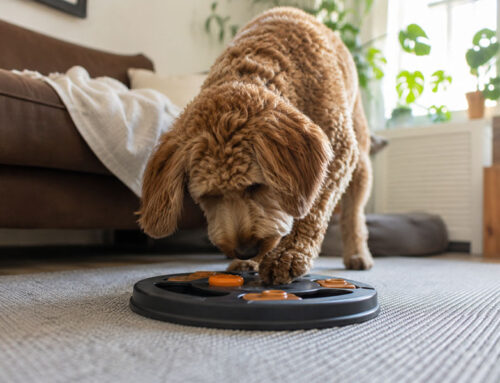
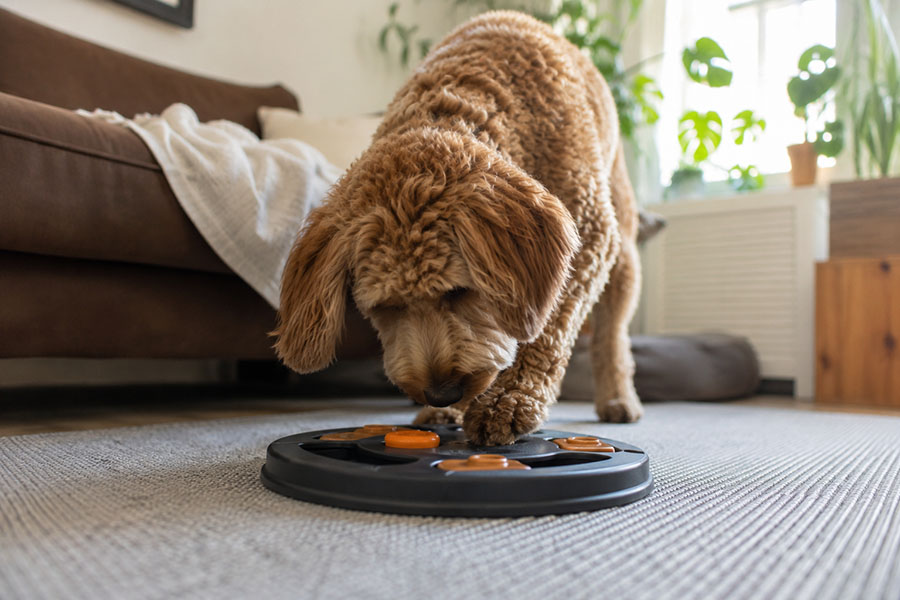
Use mental stimulation or food puzzles instead of overly wild play
-
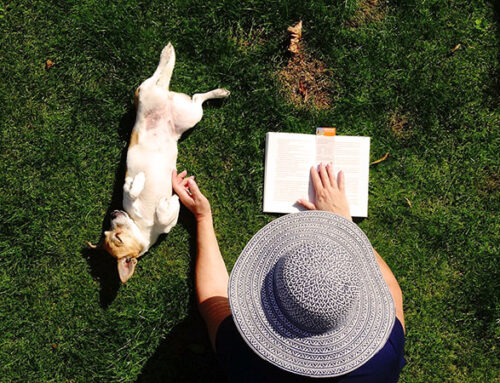
Let your puppy rest or sleep 18 to 20 hours per day
-
Use food as a reward for desired behavior
-
Repeat everything calmly and do not expect immediate perfection
Are you struggling with your puppy? We offer a online puppy course to help your puppy get the best possible start.





Leave A Comment