
My Dog Listens Perfectly at Home, But Completely Ignores Me Outside. Why?
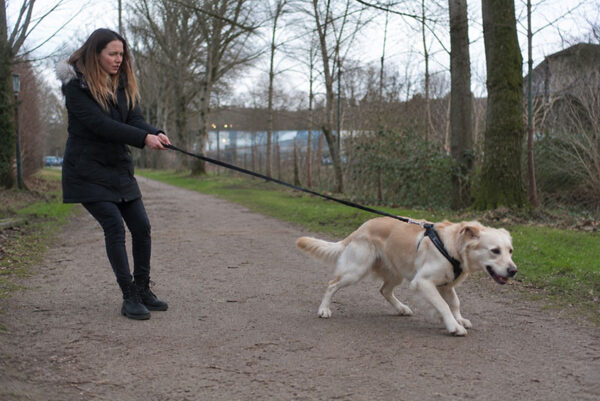 At home, your dog happily responds to commands like “sit” or “down.” They come when called and seem to understand exactly what you’re asking.
But the moment you step outside, it’s as if they’ve forgotten everything. You call their name, but they don’t even look at you. Another dog, an interesting smell or a passing cyclist suddenly becomes far more important than you.
Many dog owners wonder if their dog is being stubborn or simply choosing not to listen.
In most cases, that’s not what’s happening at all.
The Outside World Is Completely Different
To us, the environment outside may not seem that different from home. For your dog, however, it’s an entirely different world.
Inside the house, everything is familiar and predictable. There are few new smells, little movement and relatively few distractions. That makes it much easier for your dog to focus on you.
Outside, everything changes.
During a walk, your dog is constantly processing new information. They smell where other dogs have been, hear birds, traffic and children playing, and notice movement in every direction. Their brain is working hard to make sense of it all.
That takes a lot of mental energy.
Listening Requires Focus
Many people think listening is simply a matter of obedience.
But before a dog can respond to a cue, they first need to be able to concentrate. When their attention is fully occupied by the environment, there’s much less room left to focus on you.
Imagine trying to have a conversation at a busy music festival. You may genuinely want to listen, but the noise and activity make it difficult.
Dogs experience something very similar.
Your Dog Probably Isn’t Ignoring You on Purpose
When your dog doesn’t respond outside, it can feel frustrating or even personal.
In reality, they’re usually not making a conscious decision to ignore you. The sights, sounds and smells around them are simply more powerful than what you’re asking at that moment.
That doesn’t mean you’re unimportant.
It simply means the environment is competing much more strongly for your dog’s attention.
New Environments Require New Training
Most people teach new behaviours at home first, and that’s exactly the right place to begin.
The mistake is expecting those same behaviours to work immediately in the park, on a busy street or during a walk filled with distractions.
For your dog, those are completely new training environments.
A behaviour that is reliable indoors needs to be practised again in gradually more challenging situations.
Consider the Level of Difficulty
Imagine your dog happily sits every time you ask at home.
On a quiet street, they may do exactly the same.
But if another dog walks past only a few metres away, that very same cue suddenly becomes much more difficult.
Your dog hasn’t forgotten the behaviour.
The environment has simply become far more challenging.
By increasing distractions gradually, you give your dog the opportunity to succeed.
Reward Attention
Many owners only react when their dog does something wrong.
Instead, try rewarding your dog whenever they choose to pay attention to you.
If your dog looks at you during a walk without being asked, praise them or offer a reward. Over time, they’ll begin checking in with you more often because doing so becomes worthwhile.
Those small moments of connection make a big difference.
Not Every Walk Needs to Be a Training Session
It’s tempting to practise obedience during every walk.
However, dogs also need opportunities to simply explore the world.
Sniffing, investigating new scents and observing their surroundings are all natural and important behaviours.
Some walks should simply be enjoyable, without constant requests or expectations.
Don’t Expect Too Much Too Soon
When your dog struggles to listen outside, it’s easy to give more commands in the hope that they’ll eventually respond.
In reality, less is often more.
Choose one or two simple exercises and practise them in places where your dog is likely to succeed. As their confidence grows, you can slowly introduce more distractions.
This gradual approach builds lasting success.
Connection Matters More Than Perfect Obedience
The ultimate goal isn’t to have a dog that performs every command perfectly.
It’s to have a dog that chooses to stay connected with you, even when the world around them is exciting.
That kind of relationship takes time, patience and consistent practice, but the results are well worth it.
If you’d like to build better focus, attention and teamwork with your dog, visit Mika Dog Training. Our online courses help you practise real life skills in your own environment, making it easier for your dog to succeed wherever you go.




Leave A Comment